An in vivo pharmacokinetic (PK) study evaluates how a drug is absorbed, distributed, metabolized, and eliminated (ADME) in a living system over time. By measuring drug concentrations in blood, plasma, or other biological matrices at defined time points, in vivo PK studies characterize drug exposure and generate key parameters such as maximum concentration (Cmax), time to maximum concentration (Tmax), area under the concentration-time curve (AUC), half-life, clearance, and volume of distribution.
SOLUTIONS
In Vivo Pharmacokinetics
Generate meaningful PK insights before your proof of concept (POC) pharmacology studies—optimize dose selection, formulation strategies, and understand tissue specific exposure.

Why In Vivo PK is Critical to Your Program
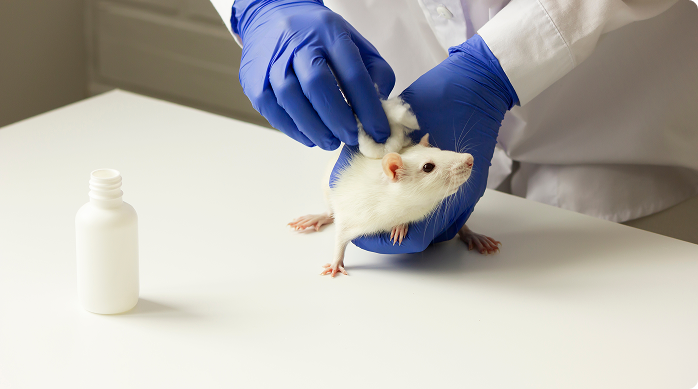
In vivo pharmacokinetic (PK) studies reveal how a drug is absorbed, distributed, metabolized, and excreted (ADME) in animal models. These data form the foundation for dose selection, formulation decisions, toxicology study design, and translation to first-in-human studies.
Unlike in vitro experiments, in vivo PK provides a whole picture assessment and the context needed to understand exposure, clearance, and potential dose-limiting factors before conducting your pharmacology POC. This nonclinical PK extends to the selection of doses for toxicology testing and also understanding potential human exposure before entering the clinical testing stage of development.
Xyzagen’s In Vivo PK Solutions
At Xyzagen, we focus on more than generating numbers, which is why we talk about our First-in-Rodent design philosophy. Our scientists not only interpret in vivo PK results in the context of your program but can talk to you about incorporating other endpoints for a more robust evaluation of exposure and tolerability, similar to a Phase 1 First-in-Human clinical trial. We also understand the importance of cost, and that sometimes a simple exposure study is all that’s needed.
In Vivo PK Capabilities
Xyzagen provides a full suite of nonclinical in vivo pharmacokinetics services to support early discovery through IND-enabling development.

NonGLP Nonclinical Pharmacokinetics
Our NonGLP PK services combine discovery-focused study design, in vivo expertise, and integrated bioanalysis to generate data that drives smarter decisions. Explore our NonGLP Nonclinical Pharmacokinetics capabilities:

Early Discovery PK
First-in-Rodent Capabilities
Proprietary First-in-Mouse® and First-in-Rat® design philosophy approaches maximize insight from early PK studies, enabling faster, more informed go/no-go decisions.

Mechanistic Insight
In Vivo Drug Metabolism & (Ocular) Tissue
Distribution Studies
Evaluate metabolic stability, metabolite profiles, and pathways that impact safety and efficacy.

Regulatory-Enabling PK
Single-Dose & Repeat-Dose PK Studies
Characterize systemic exposure, accumulation, and clearance across dose levels using your toxicology formulation to support safety, efficacy, and translational modeling.
GLP Toxicokinetics
Design and analyze nonclinical studies to characterize drug exposure and support clinical dosing strategies within your GLP toxicology studies.
Why Choose Xyzagen for In Vivo PK?
Many CROs provide PK data without context—just numbers on a page. Choosing the right in vivo PK CRO requires more than finding a provider that can generate PK data. Xyzagen goes further, integrating fit-for-purpose PK study design, in-house bioanalysis, and decades of scientific expertise to deliver results with the context and interpretation needed to inform development decisions.
Our flexible, streamlined workflows and senior-level scientific involvement help sponsors move efficiently from early discovery through IND-enabling studies, with integrated support for dose selection, formulation strategies, and translational planning. In addition, Xyzagen is a leading CRO in ocular tissue distribution, supporting the majority of today’s ophthalmic drug development programs.

Frequently Asked Questions
When should in vivo PK studies be conducted?
In vivo PK studies can be conducted throughout nonclinical drug development, beginning as early as lead optimization and candidate selection. Early studies help characterize exposure, bioavailability, and dose proportionality and can guide decisions about which compounds and formulations to advance. As development progresses, additional PK studies can support dose and regimen selection, formulation development, toxicology studies, translational modeling, and preparation for first-in-human clinical trials.
How are in vivo PK studies used for dose selection?
In vivo PK studies support dose selection by establishing the relationship between administered dose and resulting systemic or tissue exposure. PK data can help determine whether drug concentrations reach and maintain the desired exposure, evaluate dose proportionality, and identify appropriate dose levels and dosing intervals for subsequent studies. When integrated with pharmacodynamic, efficacy, safety, and modeling data, in vivo PK results can support more informed dose and regimen selection for nonclinical studies and translation toward clinical development.
How do in vivo PK studies complement in vitro ADME studies?
In vitro ADME and in vivo PK studies provide complementary information about how a drug behaves in the body. In vitro ADME assays characterize properties such as metabolic stability, permeability, protein binding, and drug-drug interaction potential, while in vivo PK studies measure actual drug exposure and disposition in a living system. Integrating these data can help explain observed PK behavior, improve predictions of clearance and exposure, guide compound and formulation optimization, and strengthen translation from discovery into clinical development.
What species are commonly used for in vivo PK studies?
Mice and rats are commonly used for early in vivo PK studies, while other species may be appropriate depending on the compound, therapeutic modality, pharmacology, metabolism, development stage, and study objectives. Species selection should be scientifically justified and based on the question the study is intended to answer. As programs advance, comparative PK and metabolism data can also help determine which species provide the most relevant information for efficacy, safety, and translation to humans.
What should you look for when choosing an in vivo PK CRO?
When choosing an in vivo PK CRO, look for a partner with expertise in study design, animal dosing and sampling, bioanalysis, PK data analysis, and interpretation. The CRO should be able to tailor study designs to the compound and development question rather than relying solely on standardized protocols. Integrated capabilities across in vivo studies, bioanalysis, ADME, pharmacokinetic modeling, and translational strategy can also help connect study results to broader development decisions and reduce handoffs between providers.
Contact Us
Ready to get more from your in vivo PK program? Contact Xyzagen to learn how our integrated expertise and proprietary approaches can accelerate your path from discovery to clinic.
